
Business Growth Strategies
Expert insights and proven strategies to scale your business
Small Businesses Gain 40% More Customers with This Strategy
Small businesses that leverage customer referrals see an average 40% increase in new customer acquisition compared to those relying solely on traditional marketing methods. This proven strategy works because people trust recommendations from friends and family more than any advertisement or sales pitch.
This guide is designed for small business owners, entrepreneurs, and marketing managers who want to build a sustainable customer acquisition system without breaking their marketing budget. Whether you're running a local service business, retail shop, or B2B company, these tactics can transform your existing customers into your most powerful marketing channel.
The best part? Most of these strategies cost little to nothing to implement – they just require the right approach and consistent execution.
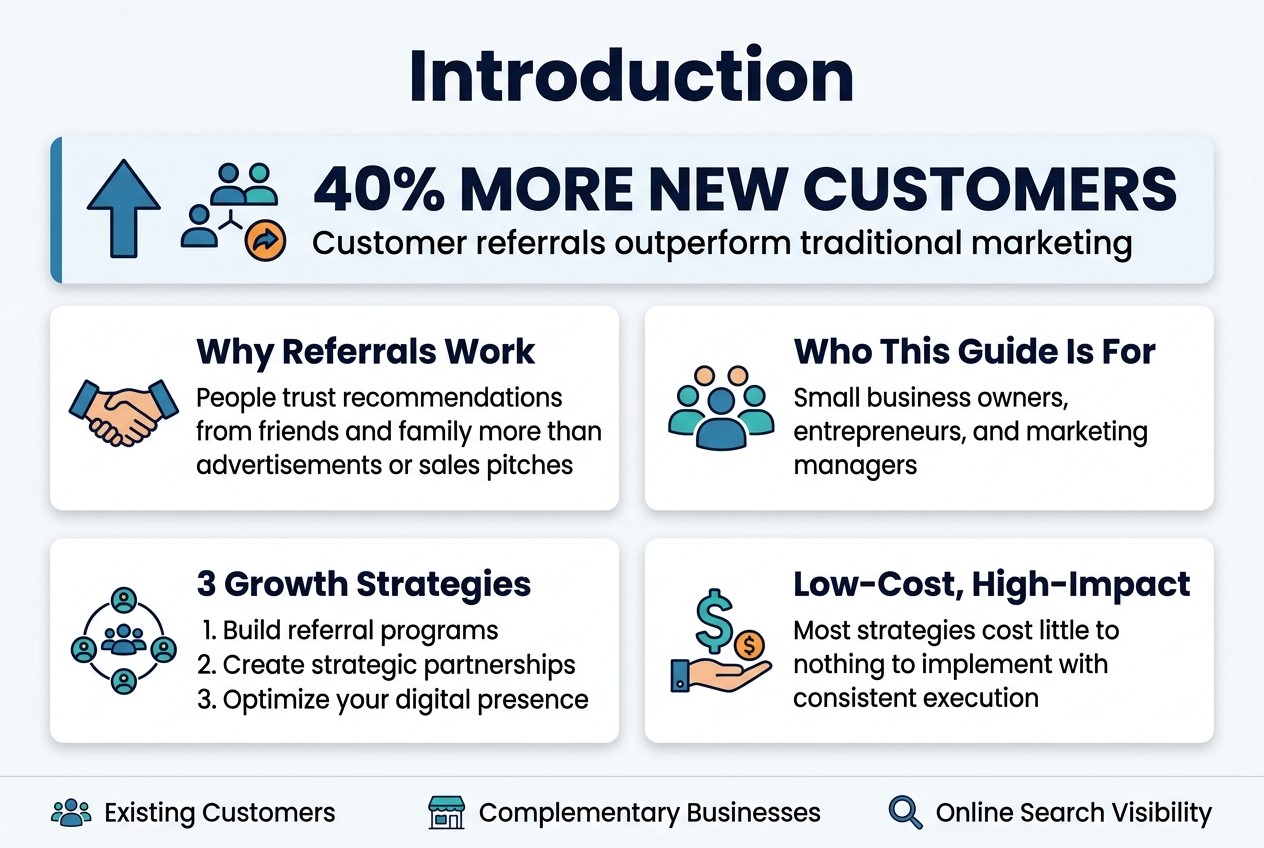
The key to success lies in creating a systematic approach to referrals. Rather than hoping customers will voluntarily recommend you, successful businesses implement structured referral programs that incentivize and facilitate word-of-mouth marketing.
Best practices include: offering clear incentives, making the referral process simple and accessible, recognizing and thanking referrers publicly, and tracking referrals to measure program success.
Leverage Your Existing Customer Base for Maximum Growth
Ask satisfied customers for referrals systematically
Creating a systematic approach to requesting referrals from satisfied customers is one of the most cost-effective ways to grow your business. Rather than leaving referrals to chance, successful businesses implement structured processes that make asking for referrals a natural part of their customer interactions.
The key to systematic referral requests lies in timing and approach. The best moment to ask for a referral is when customers are experiencing peak satisfaction - immediately after a successful purchase, following excellent customer service, or when they've achieved positive results from your product or service. During these high-satisfaction moments, customers are most likely to recommend your business to others.
To implement this systematically, train your team to recognize these optimal moments and provide them with simple scripts or templates for making referral requests. Whether through follow-up emails, phone calls, or in-person conversations, your team should feel comfortable asking satisfied customers if they know anyone who might benefit from your services.
Modern businesses leverage technology to streamline this process. Customer relationship management (CRM) systems can track customer satisfaction scores and automatically trigger referral requests at appropriate times. This ensures no opportunity is missed while maintaining a professional, non-pushy approach.
Re-engage dormant customers with special offers
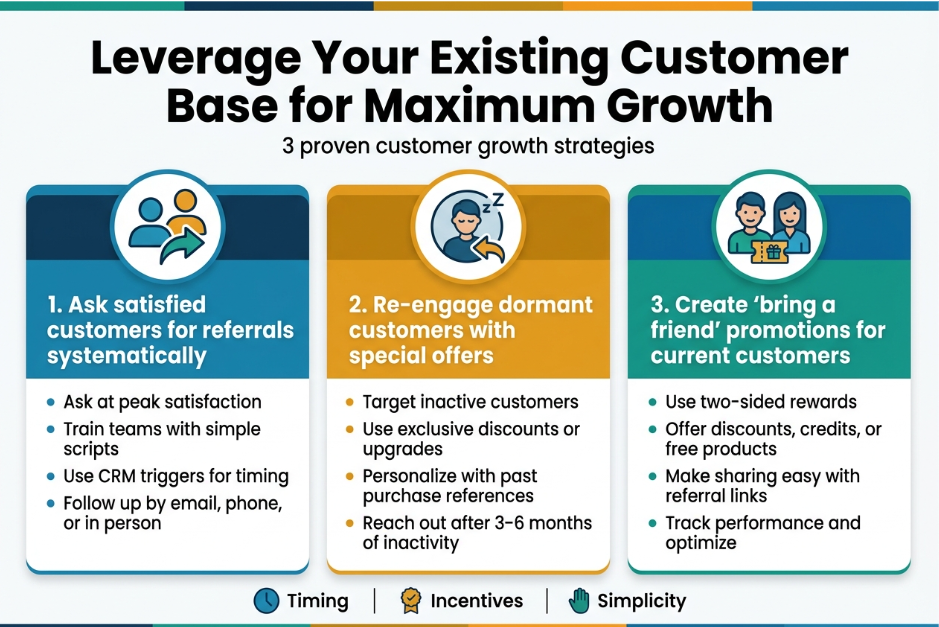
Dormant customers represent a significant untapped opportunity for growth. These are customers who have purchased from you before but haven't engaged with your business recently. Since they already have experience with your products or services, they often require less convincing than completely new prospects, making them valuable targets for re-engagement campaigns.
Special offers specifically designed for dormant customers can effectively bring them back into your active customer base. These offers should feel exclusive and valuable enough to motivate action. Consider providing percentage discounts, free upgrades, or limited-time access to new products or services. The key is making dormant customers feel valued and appreciated rather than forgotten.
Successful re-engagement campaigns often include personalized messaging that acknowledges the customer's previous relationship with your business. Reference their past purchases or interactions to create a connection and remind them of the positive experience they had with your company. This personal touch significantly increases the likelihood of response compared to generic promotional messages.
Timing is crucial for dormant customer outreach. Analyze your customer data to identify the optimal re-engagement window - typically when customers have been inactive for 3-6 months but not so long that they've completely forgotten about your business.
Create "bring a friend" promotions for current customers
"Bring a friend" promotions transform your existing customers into active brand ambassadors by providing immediate incentives for both the referrer and the new customer. These promotions work exceptionally well because they create a win-win situation where everyone benefits from the transaction.
Two-sided reward programs are particularly effective, with more than 90 percent of referral programs using this approach. When both the existing customer and their friend receive rewards, it increases participation rates significantly compared to one-sided programs. The referred friend feels welcomed with an immediate benefit, while your existing customer feels appreciated for making the introduction.
Design these promotions with attractive, relevant rewards that appeal to your target audience. Popular options include discounts, store credits, free products or services, or exclusive access to new features. The reward should be valuable enough to motivate sharing but structured within your budget to ensure profitability.
Make the sharing process as simple as possible by providing customers with easy-to-use referral links, social media sharing buttons, and clear instructions. The smoother the referral process, the more likely customers are to participate. Consider creating dedicated landing pages for these promotions that explain the benefits clearly and make it easy for both parties to claim their rewards.
Track the performance of your "bring a friend" promotions carefully to identify what works best for your audience and adjust your approach accordingly.
Build Strategic Business Relationships That Drive Sales
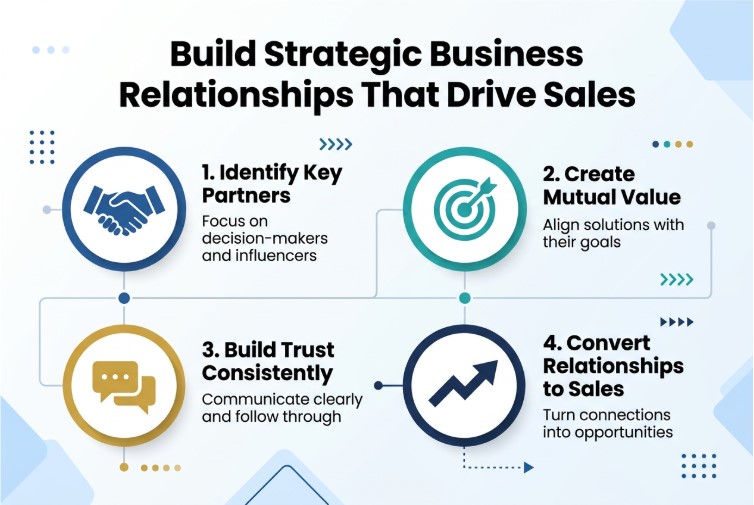
Network actively in industry-relevant organizations
Building meaningful professional relationships starts with joining the right organizations where your target customers and complementary businesses gather. Strategic networking through industry-specific organizations opens new channels for customer acquisition while providing valuable knowledge exchange opportunities that can lead to improved business practices.
When selecting organizations to join, focus on groups that align with your industry and customer base. For home service businesses, consider local chambers of commerce, trade associations specific to your field, and professional service organizations. These platforms offer structured networking opportunities where members actively seek to build mutually beneficial relationships.
The key to successful organizational networking lies in consistent participation and genuine relationship building. Rather than approaching networking with a purely transactional mindset, focus on how you can provide value to other members. This approach naturally leads to reciprocal referrals and partnership opportunities that can dramatically reduce your customer acquisition costs.
Partner with complementary non-competing businesses
Strategic partnerships with complementary businesses represent one of the most cost-effective customer acquisition strategies available. These partnerships can slash customer acquisition costs significantly because partners already have established relationships and trust with potential customers who could benefit from your services.
When identifying potential partners, look for companies that serve a similar customer base but offer different services. The process involves researching businesses that share your target demographic and business values, ensuring the partnership will be mutually beneficial and sustainable. For example, if you run a landscaping business, partnering with pool maintenance companies, outdoor lighting specialists, or home security providers creates natural referral opportunities.
Effective partner vetting is essential for long-term success. Evaluate potential partners based on their reputation, customer satisfaction levels, business practices, and alignment with your company values. Partners should enhance your brand rather than detract from it, so thorough due diligence protects your business relationship and customer trust.
Participate in community events and sponsorships
Community involvement through events and sponsorships builds brand visibility while establishing your business as a trusted local resource. This strategy works particularly well for service-based businesses because it creates multiple touchpoints with potential customers in a non-sales environment.
Community events offer opportunities to showcase your expertise, demonstrate your commitment to local causes, and build relationships with both potential customers and other business owners. Sponsoring local events, sports teams, or charitable causes increases brand recognition while associating your business with positive community values.
The most effective community participation strategies involve consistent, long-term engagement rather than one-time appearances. Regular participation in farmers markets, local festivals, charity events, or business networking meetings builds familiarity and trust within your community. This approach often leads to word-of-mouth referrals, which typically have higher conversion rates and lower acquisition costs than traditional advertising methods.
Optimize Your Digital Presence to Attract New Customers
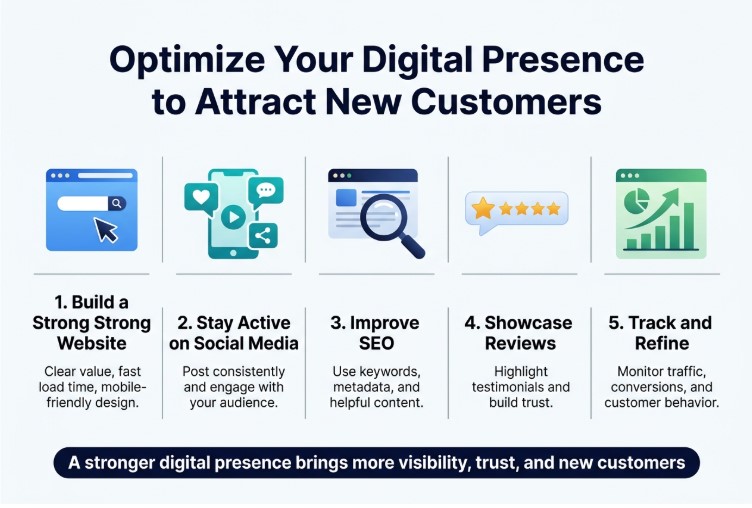
Improve website design, content and SEO performance
Optimizing your website forms the foundation of attracting new customers through digital channels. Search engine optimization (SEO) helps your website rank higher in search results, driving organic traffic without paying for advertisements.
Start with comprehensive keyword research to identify terms your potential customers use when searching for your products or services. Consider whether your audience uses formal terms like "refrigerator" or casual language like "fridge." Create a list of 20 to 50 relevant keywords, then validate these using online tools like Ahrefs, Semrush, or AnswerThePublic to ensure they're frequently searched.
Focus on creating high-quality, engaging content that answers your customers' questions and solves their problems. Write for humans first, search engines second. Include your target keywords naturally in titles, meta descriptions, and throughout your content, but avoid keyword stuffing which negatively impacts both user experience and search rankings.
Technical optimization ensures search engines can properly crawl and index your website. Your site must be mobile-friendly, load quickly, and provide secure connections (https). Page speed is particularly crucial as search engines favor fast-loading websites that improve user experience.
Leverage social media and content marketing
Social media platforms serve as powerful search engines in their own right. Depending on your audience, platforms like YouTube, Instagram, Reddit, or Amazon may be equally valuable as Google for visibility.
Create how-to videos related to your business expertise. Video content significantly enhances user experience and search engine rankings. For example, a car dealership's mechanics could offer car care tips, a restaurant chef could demonstrate recipes, or a groomer could show proper pet bathing techniques.
Develop comprehensive content that showcases your experience, expertise, authoritativeness, and trustworthiness (EEAT). Post regularly on topics related to your field to establish domain authority. Search engines recognize sites that consistently publish fresh, valuable information on specific subjects.
Structure your content for AI summaries by using clear headings, bullet points, FAQs, and concise answers to common questions. With the rise of AI-powered search features, optimizing for conversational keywords and featured snippets becomes increasingly important.
Cultivate and showcase positive online reviews
Online reviews serve as crucial ranking factors for both search engines and customer decision-making. Set up a Google Business Profile, which is free and literally places your business on Google Maps while increasing visibility for local searches.
Actively solicit reviews from customers by creating shareable links for your Google Business Profile. Include these links in thank-you emails, on receipts, and in follow-up communications. However, ask all customers equally for reviews, not just satisfied ones, to maintain authenticity and comply with platform guidelines.
Respond to all reviews professionally, both positive and negative. This demonstrates engagement and builds trust with potential customers who read your responses. Local SEO becomes particularly powerful when combined with consistent review management, as 72% of consumers who perform local searches visit stores within five miles of their location.
Encourage reviews across multiple platforms relevant to your industry. While Google reviews are essential, platform-specific reviews on sites like Yelp, industry directories, or specialized review sites can enhance your overall online reputation.
Use social proof to build credibility
Establish credibility through strategic link building and mentions across the web. Acquire high-quality backlinks from trusted sources like chambers of commerce, industry associations, or local news outlets. One high-quality link from an authoritative source often provides more value than multiple links from obscure blogs.
Focus on earning links organically rather than purchasing them, which violates search engine guidelines. Create valuable content that other websites naturally want to reference and link to. Reach out to local blogs, podcasts, and industry influencers for collaboration opportunities.
Showcase customer testimonials and case studies prominently on your website. Include author bios and credentials to demonstrate expertise, particularly important for businesses in fields requiring specialized knowledge like medical or financial services.
Monitor your brand's mentions across AI platforms and traditional search engines using available tools. In the AI era, unlinked mentions of your brand become increasingly important for establishing authority and relevance, complementing your traditional link-building efforts.